
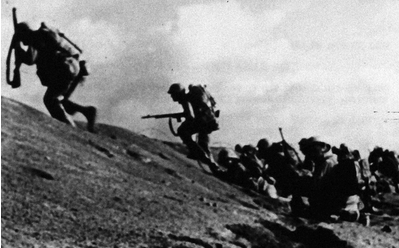
On Feb. 19, 1945, Pfc. Albert Pagoaga and his fellow Marines landed on Iwo Jima in a deadly amphibious assault as Japanese defenders unleashed a withering barrage of artillery and machine gun fire. Pagoaga, a Boise, Idaho native whose parents had emigrated from the Basque Country, survived the bloody fighting on the volcanic sand beach.
But on Day 20 of the battle for the strategic Pacific island, Pagoaga lost part of his leg in a mortar blast that killed three of his friends. He was awarded the Purple Heart.
Pagoaga, who passed away in 2017, is one of more than 2,150 veterans of Basque descent who served in all branches of the U.S. military during World War. These veterans who fought across the Pacific and Europe will be honored in a memorial that has been in the planning stages for a decade.
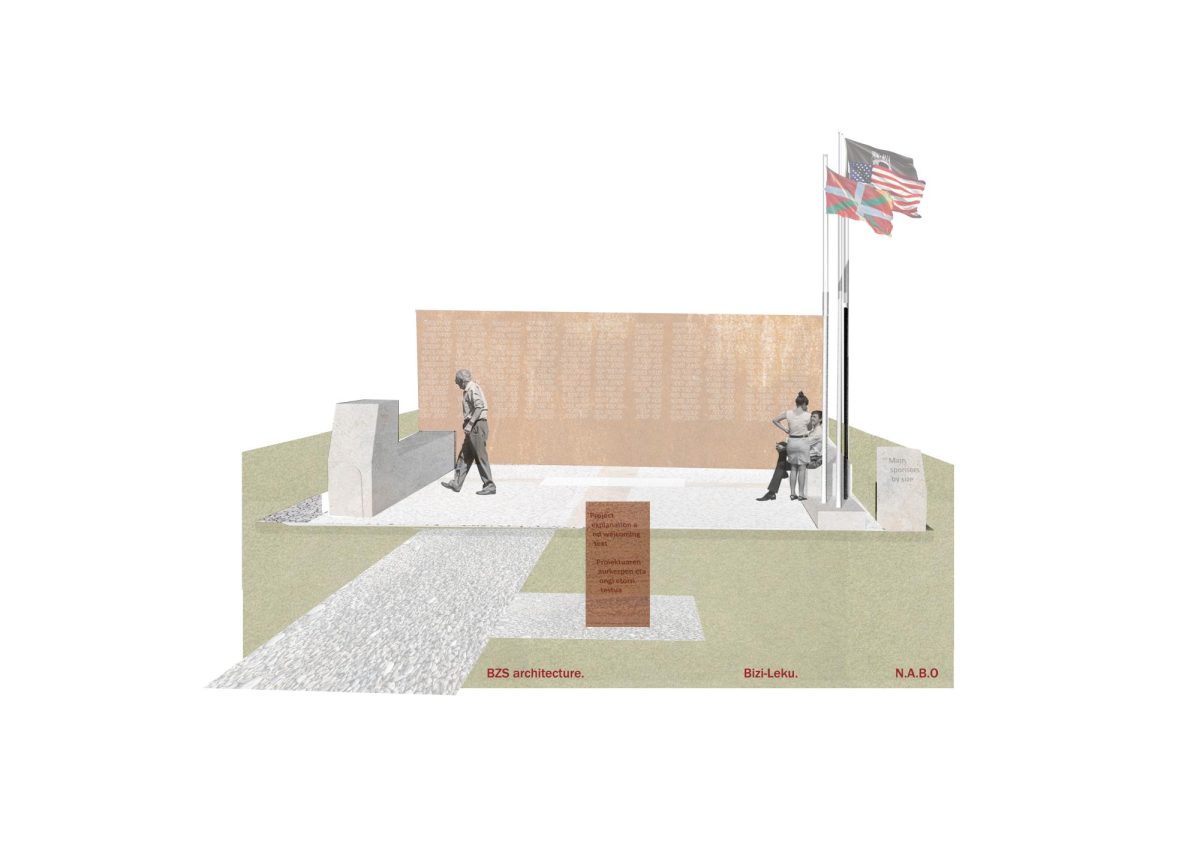
The long-awaited architectural design of the National Basque World War II Veterans Memorial and the city where it will be located will be announced on Feb. 14 at the Basque Cultural Center in South San Francisco. The announcement will coincide with the 44th anniversary celebration of the center, a beacon of pride and culture for the Basque American community. The announcement will be made at 2 p.m. and it will be livestreamed.
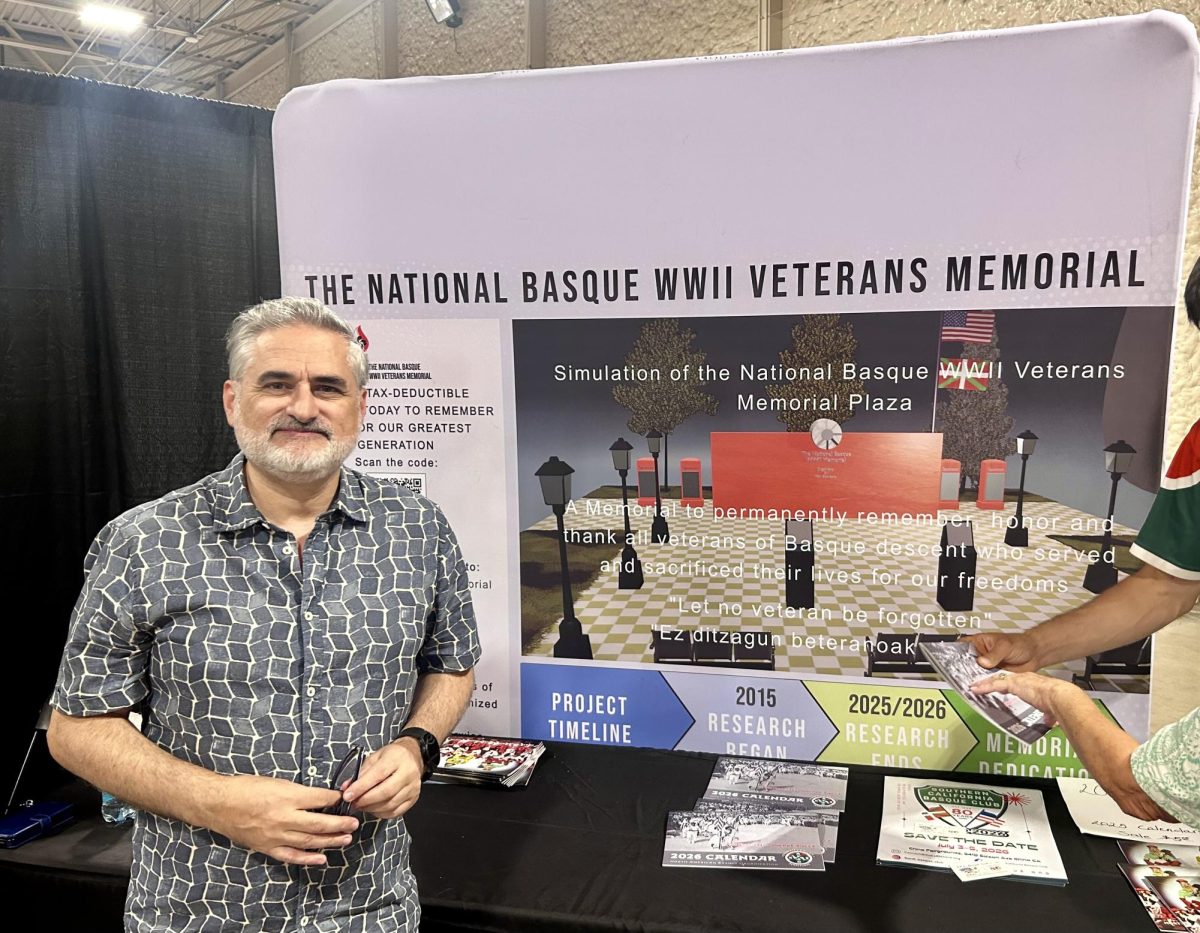
“We have more than 2,150 Basque Americans who served during World War II, but their contributions remain largely absent from the national narrative,” said Professor Pedro Oiarzabal, who is a principal researcher for the “Fighting Basques: Memory of WWII” research team.
“This project brings that history to public view,” he said in an interview with Euskal Kazeta. “It is time that we pay homage to those brave men and women who sacrificed — even with their lives — for the freedom that we all cherish.”
Read More of our Stories about the Memorial
Oiarzabal, who has been spearheading the project, said the memorial will be engraved with the names of Basque veterans whom he and his team have identified through meticulous research of historical archives and databases. The memorial will also feature an interactive element with short stories and photographs.
The project to build the memorial is supported by the North American Basque Organizations. Anyone wishing to support the memorial can make a tax-deductible contribution here.
The World War II memorial is the first project of this magnitude in the Basque American community since the National Monument to the Basque Sheepherder was erected in 1989 in Reno, Nevada. The large sculpture pays homage to the legacy of Basque immigrants in the West.
“The Basque Sheepherder Monument was the first major public recognition of Basque people in the American West,” Oiarzabal said. “The World War Two Memorial builds on that legacy. And I believe the memorial that we’re trying to build extends this narrative from the labor of migration to military service and national sacrifice.”
To publicize the exploits of the veterans, the team launched a blog, Echoes of Two Wars 1939-1945 in English, and Ecos de Dos Guerras in Spanish and Basque, and team members promote the project on social media and through newspaper articles. The team has also been involved in special events and tributes to the veterans. The team is sponsored by the Basque Country homeland history association, Sancho de Beurko.
If you are a relative of a Basque WWII veteran and you would like to find out if he or she is on the list, please contact the project researchers: [email protected].
Heather Campbell • Feb 11, 2026 at 1:10 pm
Albert Pagoaga is my uncle. He was very proud of his service to our country. We are so grateful to have him and his fellow service members honored in this way.
Nancy Zubiri • Feb 13, 2026 at 11:30 am
Thank you for reading the article, Heather. We appreciate the service of your uncle and the many other Basque American veterans.
Lori Woodland • Feb 10, 2026 at 2:21 am
My dad, Jose Marie Echevarria, was a prisoner of war in Germany. He was a B17 gunner and shot down on his 21st mission. Spent most of seven months marching across the country until the war ended and he was liberated.
Nancy Zubiri • Feb 10, 2026 at 10:07 am
Thank you Lori for telling us about your father. If you would like to know if your father is included in the list, write to the email listed at the end of the article: [email protected].
— The Editors