
Initially, the goal of the “Fighting Basques” project was to identify Basque Americans who served in the armed forces during World War II, documenting a little-known but important part of the most widespread and deadliest conflict in human history.
But as the list of names continued to grow, Professor Pedro Oiarzabal realized that a permanent memorial was needed to pay homage to the heroism and sacrifices of the men and women who helped battle the forces of tyranny in Europe and the Pacific.
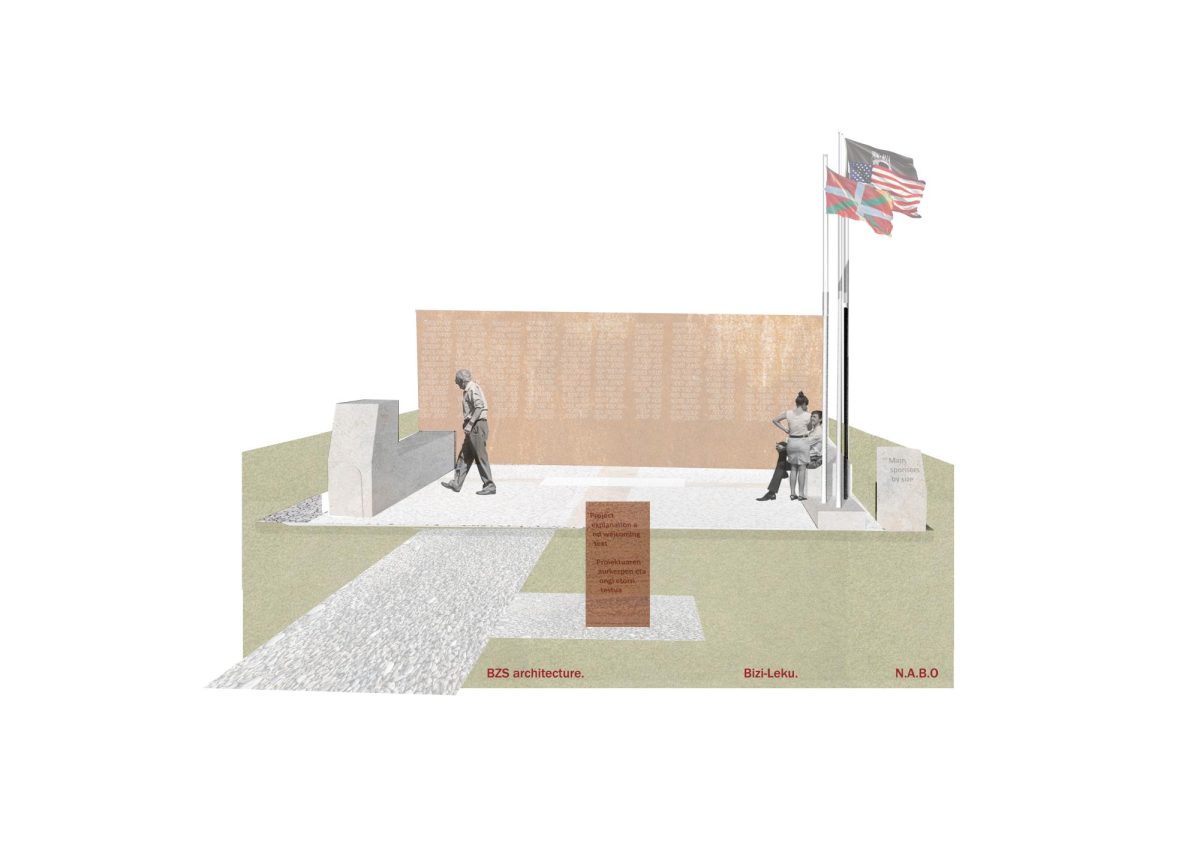
On Saturday, Oiarzabal and project supporters unveiled the design of the National Basque World War II Veterans Memorial and announced that it would be built in Gardnerville, Nevada, a historical Basque community.
“As a community, we are finally creating a permanent national space to remember, honor, and thank Basque American veterans who served during World War II,” said Oiarzabal, who is spearheading the project as the primary researcher.
The announcement was made during a weekend celebration to honor the 44th anniversary of the Basque Cultural Center in South San Francisco.
The effort to create a memorial has been more than ten years in the making and represents the most significant undertaking for the Basque American community since the campaign to build the National Monument to the Basque Sheepherder, which was erected in 1989 in Reno, Nevada. That large sculpture pays homage to the legacy of Basque immigrants in the West.
“This memorial,” Oiarzabal said, “represents long-overdue public recognition and will stand as a symbol of pride, service, and belonging, comparable in spirit to the National Monument of the Basque Sheepherder in Reno.”
The conceptual design of the World War II memorial is titled “Bizi leku,” which means “the Place to Live” in the Basque language of Euskara. Basque architect Maider Bezos Lanz created the Corten steel design. The design is intended to reflect the experience of migration and settlement, as well as symbolize the adoption of the United States as a new home without losing cultural roots.
“Bizi leku is conceived as a welcoming space,” Bezos Lanz said. “It is a symbolic home, one that brings together all the names engraved on its walls, allowing them to coexist in peace and dignity, united by a shared history and a shared place of remembrance.”
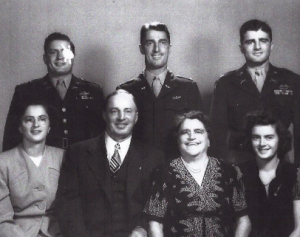
The memorial will feature the names of more than 2,100 veterans who have been identified by a team of researchers who pored over databases and historical archives. Among them are three brothers from Gardnerville —- John, William and Leon Etchemendy -— who were once described by the Reno Gazette as the “the most decorated group of brothers in Nevada” because of the medals and campaign ribbons they were awarded.
In Gardnerville
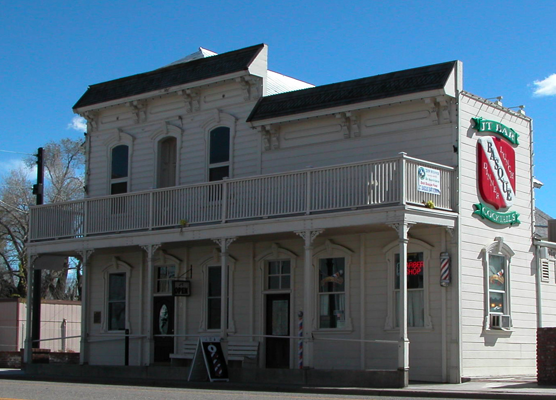
The memorial will be built at Heritage Park, just a short walk from Highway 395, which is lined with historical buildings in the small city in the picturesque Carson Valley. Among the businesses on the main drag is J.T. Basque, a venerable bar and restaurant that serves family style Basque meals and has been owned by the local Basque Lekumberry family for decades.
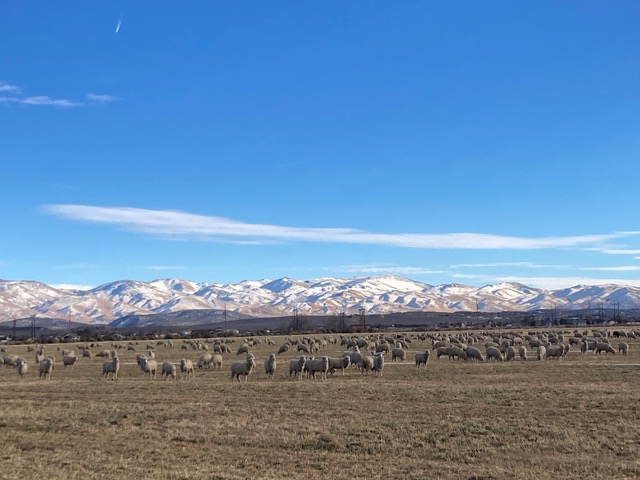
Founded in 1879, Gardnerville was an important sheep center and attracted Basque immigrants who helped raise sheep around the turn of the century, Euskal Kazeta Editor Nancy Zubiri wrote in her book “A Travel Guide to Basque America.”
In its heyday, the downtown was home to several Basque restaurants and boardinghouses, where herders stayed while taking breaks from tending their flocks on the open range. The city is home to an active Basque club, Mendiko Euskaldun Cluba, which hosts a popular festival in August.
The project to build the World War II memorial is supported by the North American Basque Organizations. Anyone wishing to support the memorial can make a tax-deductible contribution here.
Read More Stories About the Memorial
To publicize the exploits of the veterans, Oiarzabal’s research team launched a blog, Echoes of Two Wars 1939-1945 in English, and Ecos de Dos Guerras in Spanish and Basque, and team members promote the project on social media and through newspaper articles. The team has also been involved in special events and tributes to the veterans. The team is sponsored by the Basque Country homeland history association, Sancho de Beurko.
If you are a relative of a Basque WWII veteran and you would like to find out if he or she is on the list, please contact the project researchers: [email protected].
Claude Arretche • Feb 14, 2026 at 9:22 pm
Sounds amazing! How about a monument dedicated to the resistance fighters from back home? My father’s family was involved.