
There are certain dishes that do not need explanation. They arrive in your life already carrying the weight of memory, belonging, and quiet tradition. When someone sent me a copy of my Aitachi’s roasted chicken recipe, it felt like one of those moments. A recipe that instantly made sense because I had already lived the story behind it.
I spent the summer of 2022 in Souraïde, a small village tucked into the green folds of the Basque countryside. It was my first time in the region without my parents, and I was there for an internship with a Patxaran (a Basque liqueur) company that was exploring expansion into the United States. I helped with research on the U.S. market, translation and connecting with different distributors and restaurants interested in introducing Patxaran. (See our article on Basque drinks.) Through that work, I was not only learning about the business of Patxaran, but also about the cultural pride and history behind it.
Every weekend, my grandfather’s nephew would pick me up and bring me to their home in Irisarry. I would stay in a room just at the top of the hill from the house where my Aitatxi grew up. We wandered through local bestak or festivals, visited neighbors who greeted us like old friends and moved at the unhurried pace that defines rural Basque days.
That summer, I connected further with my Basque identity. My cousins brought me along to bestak in nearby villages, introducing me to their friends and folding me into their routines. Each weekend we hiked through different paths of the Camino de Santiago, visited cities like Bayonne and Saint Jean de Luz, and slowly the place began to feel familiar in a way it never had before.
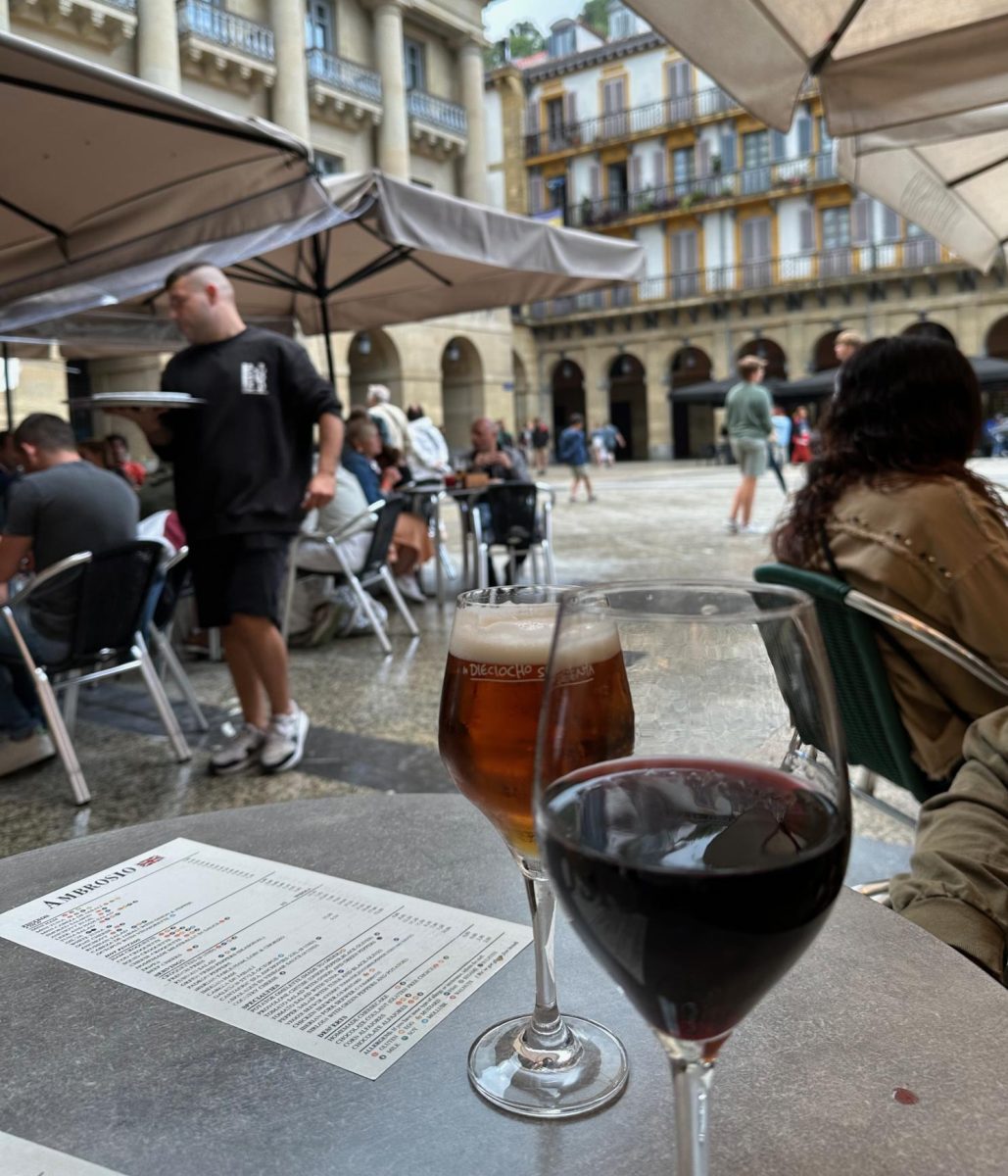
Like clockwork, every dinner the family came together and had an aperitif (pre-dinner drink) while talking about their day. We sat around a table that always seemed to grow to fit whoever arrived. Food is not just nourishment; it’s the language of community.
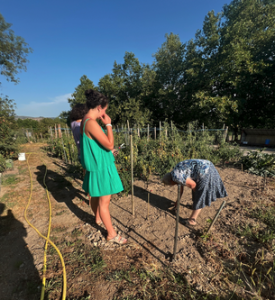
On my last weekend there, that language spoke louder than ever. Early in the morning, we walked to my aunt’s house, where the garden was overflowing with tomatoes, peppers, and herbs. We picked what we needed, filling our arms with the colors of late summer. Later, we carried everything to her son’s home, where the kitchen was already warm with the smell of roasting chicken.
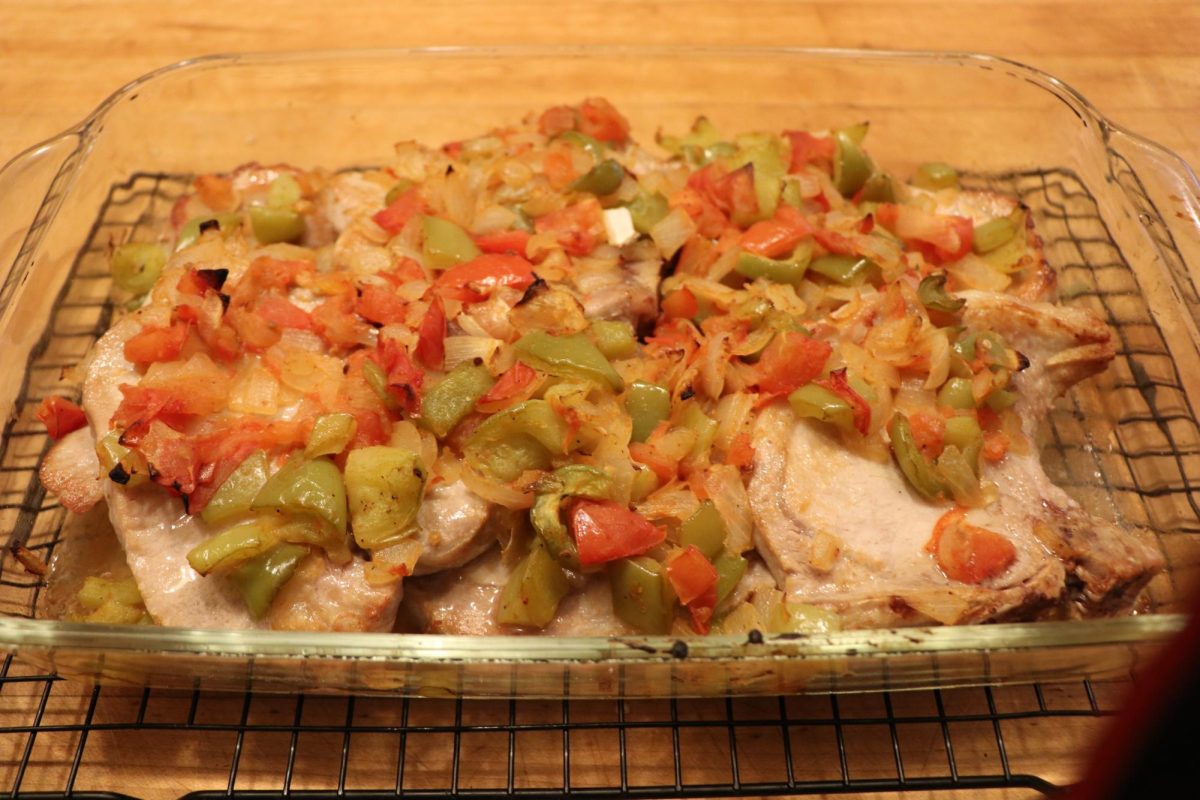
Lunch that day was simple: a whole chicken roasted until golden, a bright piperade (see recipe) simmered slowly on the stove, and very crisp French fries, exactly like the ones I knew and loved at the Basque restaurants in California. As we ate, my cousins explained that this was a classic Sunday meal in France; a tradition built for long afternoons, for families who linger at the table, for conversations that stretch.
Now, for many Basque people that may seem like most meals encountered there. This one felt different. It was an incredibly amazing meal and to many may be thought of as simple or effortless. But calling it simple feels like a disgrace to the tradition. The meal left room for a deeper connection to fill the room. They wanted me to experience it as a goodbye, a gesture that said you’re part of this too.
That meal stayed with me. Not because it was elaborate, but because it was not. It was the kind of food that brings people together without trying.
Now four years later, reading my Aitachi’s recipe takes me back to that same table in Irisarry. The same roasted chicken, the same piperade, the same spirit. A reminder that food can be a story, a memory and a homecoming, all at once.
Looking at the recipe, you can see there are not many words. It is very straight to the point, leaving very little room for doubt. This same recipe carries on the tradition of celebration and community at the Basque clubhouse in Chino, Calif., where my Aitachi, Isidore Camou, cooked for many years. This roasted chicken recipe was regularly served there.

Isidore Camou’s Basque Roasted Chicken
Ingredients
1-2 lbs. of drumstick, thighs and breasts of chicken
Small amount of butter
Salt, pepper
Garlic powder
Instructions
Butter the bottom of the baking pan, then cover with salt, pepper and garlic powder.
Cover with the pieces of chicken. Sprinkle the top of chicken with salt, pepper and garlic powder.
Dab about two large tablespoons of butter on top of the chicken pieces.
Do not cover. Cook in a 400 degree oven until done, approximately an hour. Chicken should reach an internal temperature of 165 degrees.