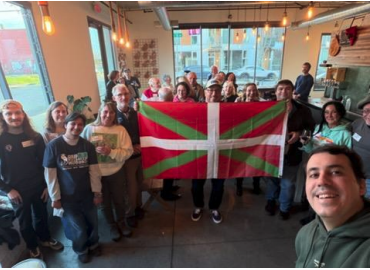

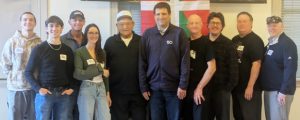
A group of about 75 Basques, a few from as far away as California, Oregon, Wyoming and Canada, gathered March 21 for the Seattle Euskal Etxea annual Spring Dinner. Some of them played in the club’s mus tournament. All of them made new friendships and renewed old ones.
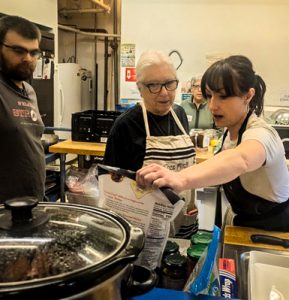
“We were trying for a sense of community, of sitting down and coming together at a boarding-house table,” said Edurne Arostegui, the club’s vice president, as she presided over the kitchen. The large dining hall in the Wallingford Community Senior Center had been arranged and decorated to reinforce that image.
The Seattle Basque club has waxed and waned over the years, but more recently, a dedicated group has provided a hub for the local Basque diaspora. They organize annual spring and summer picnics, often held at Lake Sammamish State Park, and provide community updates through their Facebook page and Instagram account.
During the dinner, members and their guests sat at two rows of long banquet tables while board members and volunteers served food family-style. The menu was deliciously simple and traditional: cream of zucchini soup, cod-stuffed piquillo peppers, salad, roasted tri-tip and potatoes, cheese, and a choice of Basque burnt cheesecake or Gateau Basque for dessert. All washed down with red wine. For many, the evening brought back memories of family gatherings past and a warm sense of community — familia — that is so uniquely Basque.
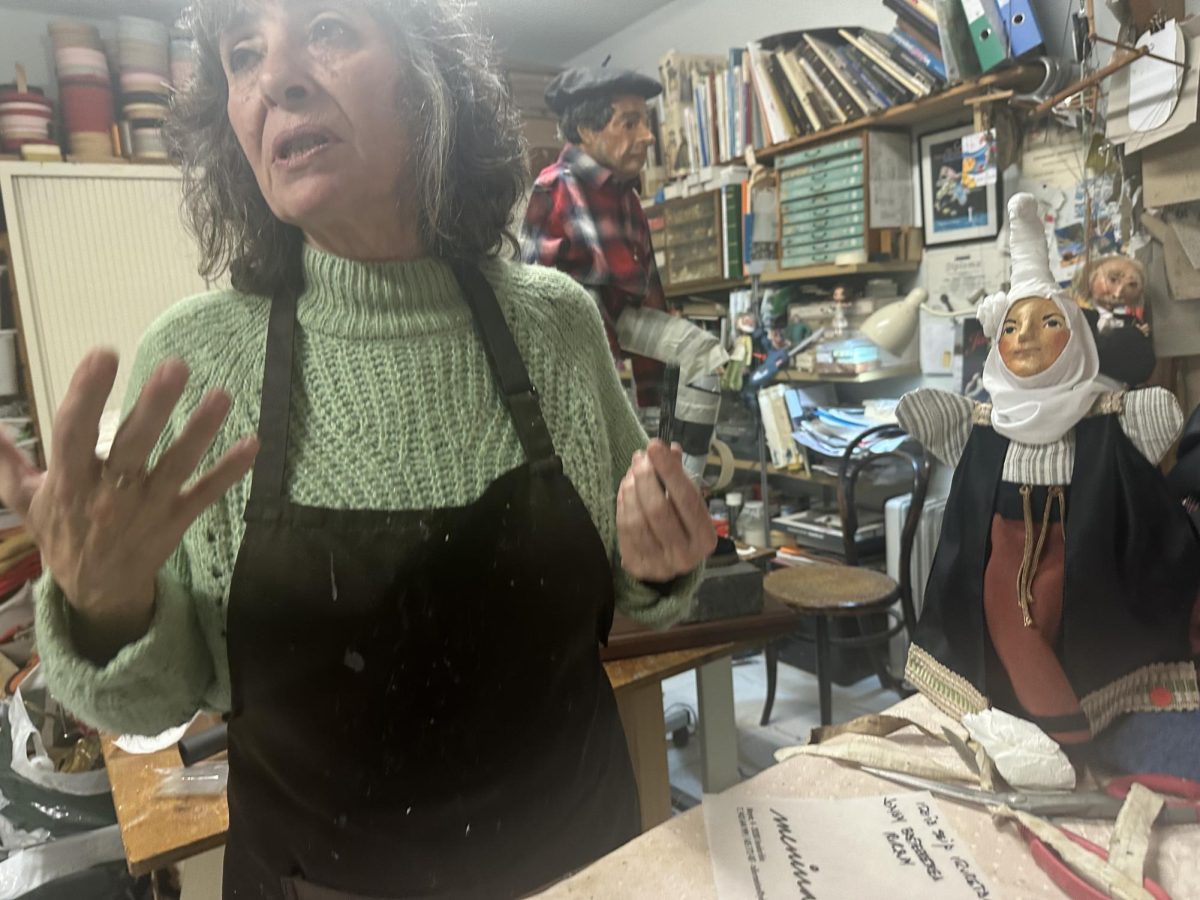
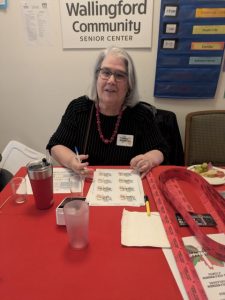
After dinner, people with long strings of raffle tickets waited, hoping to win the beautiful earthenware mugs and dishes created by club director Michelle Errecart. While the raffle took place at one end of the hall, the tables and chairs at the other end were whisked away to make room for music and dancing.
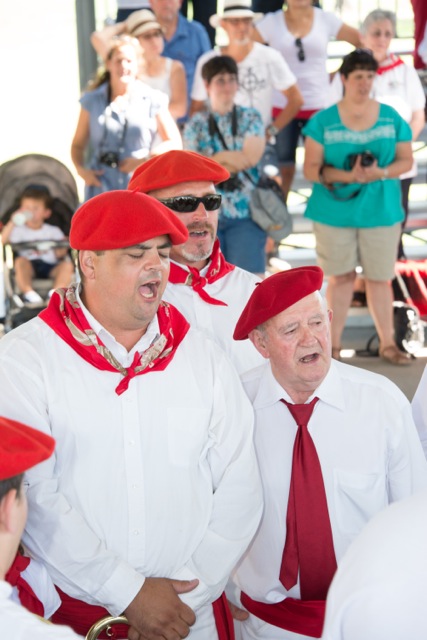
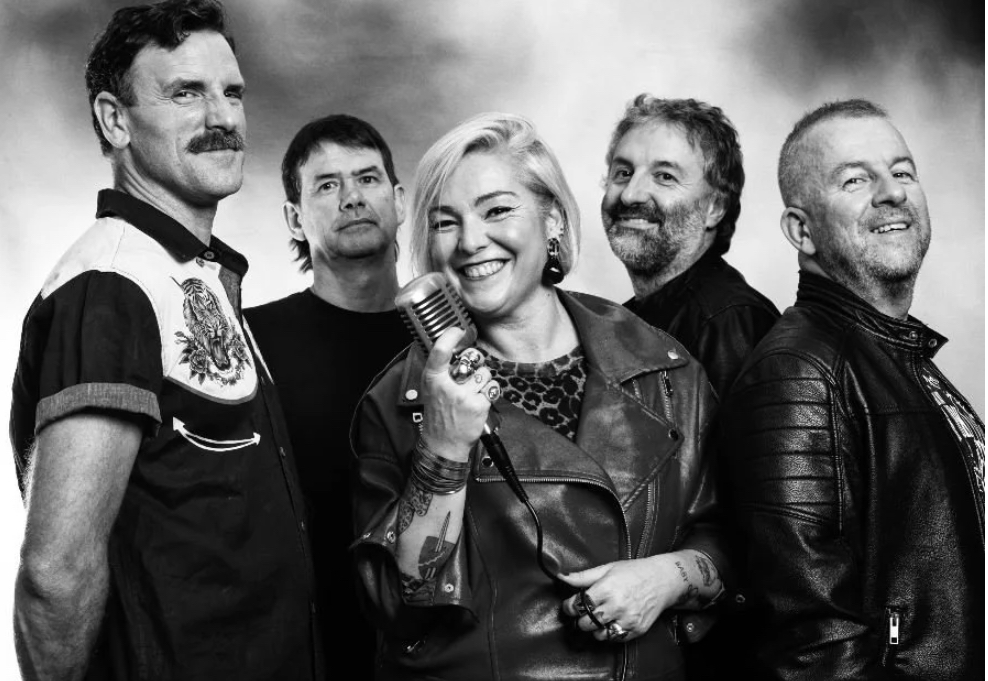
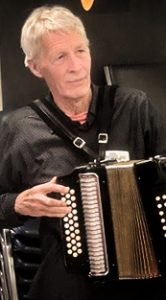
Club president Jean Escoz introduced his long-time friend and accordionist, David Romtvedt, an award-winning poet, writer, and musician from Buffalo, Wyoming. Escoz, himself a Basque dancer of some note, and Romtvedt then opened the dancing with an impressive and delightful dance demonstration.
The winners of the mus tournament were Jose Luis Mallea and Gaizka Mallea in first place, and Joe Guerricabeitia and Craig Fellom in second place. They will represent the Seattle club at the national North American Basque Organizations mus tournament finals in South San Francisco June 20.
History of Basques in Washington
Back in the early 1900s, the area around the small town of Yakima in eastern Washington had the only Basque community of note in the state. Washington did not have large expanses of public domain land where sheep ranchers could graze sheep, as they did in other western states. As a result, few Basques came to Washington to work as sheepherders.
Because of Pacific Northwest’s abundant rain, much of the state’s western land was claimed for agriculture early on. Sheep tended to be farm flocks adjacent to farms, according to HistoryLink.org. On the drier eastern side of the state, the Columbia River Basin Project, created by the Grand Coulee Dam, provided irrigation water for farming.
Some Basques ran sheep through the Columbia River basin, summering near Mt. Rainier or Mt. Adams or other peaks in the Cascade Range. Two brothers, Sebastian and Juan Miguel Etulain, were well known sheep ranchers here. The historic El Hotel Bascongado in Yakima housed many of the young Basque men who came to herd sheep for them over the years. Read about Sebastian Etulain’s son Richard’s childhood growing up on the family sheep ranch. Nephew Miguel Etulain, who worked for many years on a cattle ranch here, had an interesting family story in the Basque Country before he even arrived in the U.S.
Basque Students Experience Yakima
See Richard Etulain’s book Boyhood Among the Woolies” on Amazon.
Read more about the history of Basques in the United States in Nancy Zubiri’s book “Travel Guide to Basque America.”